When it comes to replacing your conservatory roof, the decision isn’t as straightforward as it might first seem. The right roof can transform your conservatory into a comfortable, year-round living space, while the wrong choice can leave you with ongoing temperature and maintenance issues. The three main options on the market—glass, solid, and polycarbonate, each have advantages and drawbacks. In this post, we’ll help you weigh up each option so you can make an informed decision that best suits your home, lifestyle, and budget.
Glass Conservatory Roofs
Glass conservatory roofs have long been a favourite in the UK, valued for their classic look, which floods your space with natural light. Modern glazing technology has made glass roofs far more efficient today than they were in the past. Many are now equipped with thermal insulation and self-cleaning coatings, making them easier to maintain and more effective at regulating heat.
Pros:
- Natural Light: Glass roofs let in the most sunlight, making your conservatory feel bright, airy, and connected to your garden.
- Clear Views: Enjoy unobstructed views of the sky, perfect for stargazing or appreciating changing weather.
- Modern Glazing: Advanced features like tinted or solar control glass help reduce glare and overheating in summer, while keeping warmth in in winter.
- Low Maintenance: Self-cleaning glass minimises the need for regular cleaning.
Cons:
- Cost: Glass roofs are usually the most expensive option upfront.
- Heat Loss: Despite advances, glass can still lose more heat than a solid roof, particularly in older conservatories.
- Noise: Heavy rain or hail can be noisy against a glass roof.
Solid Conservatory Roofs
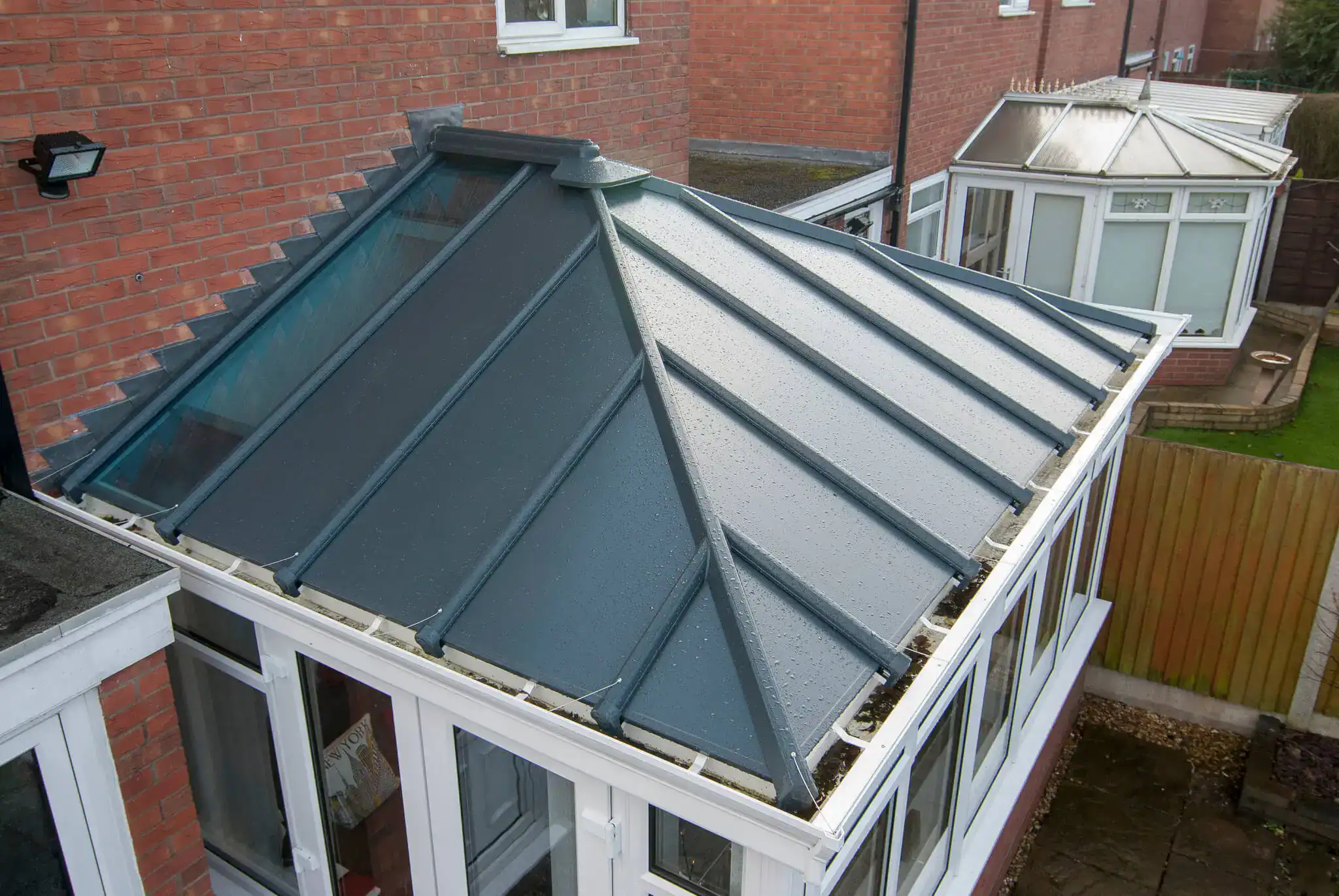
Solid conservatory roofs, typically constructed from insulated tiles or panels, are a relatively new innovation. They give you a seamless, year-round extension of your living space, essentially turning your conservatory into an extra room of your home.
Pros:
- Thermal Efficiency: Solid roofs are the best at retaining heat in winter and keeping cool in summer, making your conservatory comfortable throughout the year.
- Reduced Noise: Solid materials significantly cut down noise from rain, hail, and wind.
- Versatile Usage: With plastered ceilings and integrated lighting, solid roofs make the conservatory feel like a true extension of your home.
- Increased Property Value: A solid roof can add to your property’s market appeal and value.
Cons:
- Loss of Natural Light: Solid roofs let in far less light compared to glass or polycarbonate, which might alter the feel of your conservatory.
- Planning Permission: Some installations may require planning consent, depending on your property and local regulations.
Polycarbonate Conservatory Roofs
Polycarbonate is a lightweight, plastic-based material that has been a popular choice for conservatory roofs for decades. However, many of our clients call us because they want to replace their old polycarbonate roof. It was favoured for its affordability and ease of installation, but is not so popular these days, as it does come with some compromises in terms of comfort and longevity.
Pros:
- Affordability: Polycarbonate is the cheapest option, both in terms of material and installation costs.
- Lightweight: Its light nature puts less strain on existing frames and structures.
- Variety: Available in various thicknesses and tints to help manage light and heat.
Cons:
- Poor Insulation: Polycarbonate offers the least thermal efficiency, making conservatories hot in summer and cold in winter.
- Noise: Rain and hail can sound extremely loud on polycarbonate roofs.
- Shorter Lifespan: Polycarbonate tends to discolour and degrades faster than glass or solid roofs.
- Appearance: Some homeowners find the plastic-like appearance less attractive than glass or tiled alternatives.
Which Conservatory Roof Replacement is Best?
The answer depends on your priorities. If maximising light and views is most important to you, glass is hard to beat, especially with modern glazing. If you want a space that functions as an all-season extension with excellent energy efficiency, a solid roof is the best choice. For those on a tight budget or with older conservatories that cannot support heavy materials, polycarbonate remains an accessible option, though you may sacrifice some comfort.
Consider how you use your conservatory: is it a summer sunroom, a dining area, or a full living space? Balance your priorities—light, warmth, cost, maintenance, and looks—before deciding. Contact us to help you choose if you are not sure which material will best suit your conservatory.
Whichever roof you choose, a quality replacement can breathe new life into your conservatory, so you can enjoy it for years to come.