
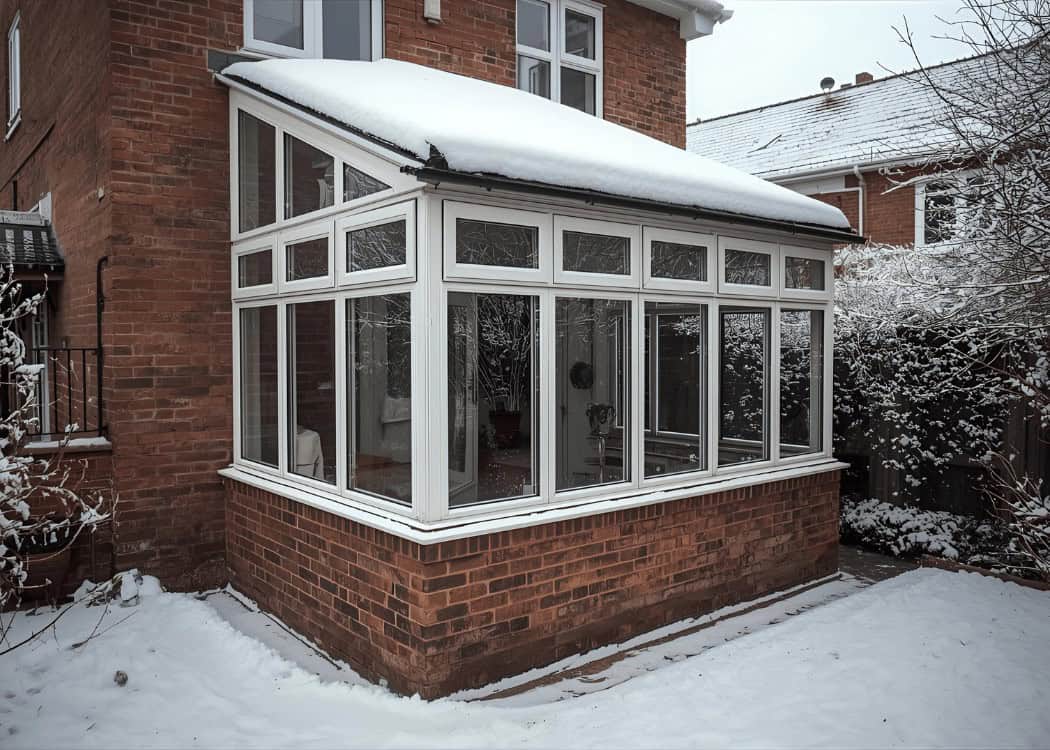
If you have a conservatory, you’ll know how frustrating it can be. In the middle of July, it feels like a greenhouse. By January, it’s as cold as your fridge. For many UK homeowners, conservatories end up being wasted spaces except for a few months in Spring and Autumn. They are beautiful to look at, but impractical to use.
But why does this happen? And more importantly, what can be done about it?
Here we look at the main reasons why conservatories get so hot in summer and cold in winter, and the solutions that can transform your conservatory into a comfortable, welcoming room all year round.
The Greenhouse Effect – Why Conservatories Overheat in Summer
Most traditional conservatories were built with lots of glass, often with a polycarbonate or single-glass roof. While this lets in light, it also traps heat. The effect is similar to a greenhouse: sunlight passes through the glass and warms the inside, but the heat can’t escape easily.
Add in poor ventilation, and you end up with stifling temperatures that make the room unusable for much of the summer.
Common Causes of Summer Overheating
- Polycarbonate roofing – Lightweight but poor at reflecting heat.
- Single glazing – Allows heat to flood in with little insulation.
- No ventilation – Warm air gets trapped inside.
- South-facing orientation – Maximises sun exposure, making the problem worse.
The Cold Reality – Why Conservatories Freeze in Winter
When winter comes, the problem flips. Instead of trapping heat, many conservatories lose it. Glass and polycarbonate are poor insulators compared with solid walls and insulated roofs. Heat from your heating system escapes quickly, leaving the room draughty and uninviting.
Common Causes of Winter Heat Loss
- Outdated glazing – Single-glass panes allow warmth to leak out.
- Poorly insulated roof – The majority of heat escapes upwards.
- Unsealed frames – Draughts enter through gaps around windows and doors.
- Thin flooring – Heat can be lost through the base if not insulated.
Why This Makes Conservatories Seasonal Rooms
The combination of excessive heat in summer and icy cold in winter is the main reason many conservatories end up as seasonal rooms. They’re used for a few weeks of the year but sit empty for the rest of the time. For such a big investment, that’s a real shame.
How to Fix the Temperature Problem
The good news is that modern solutions mean you don’t have to live with an unusable conservatory. With the right changes, your space can be turned into a comfortable room that feels like a true extension of your home.
1. Invest In a New Roof
The roof is the biggest culprit for temperature issues. Replacing an old roof can completely change the performance of your conservatory.
Solid insulated roofs – These look like a traditional roof from the outside and keep heat in during winter while reflecting sun in the summer.
Tiled conservatory roofs – Durable, stylish, and excellent for thermal efficiency.
High-performance glass roofs – If you want to keep a bright, airy feel, a modern glass Ultrasky roof will regulate temperatures effectively.
2. Improve the Glazing
If your conservatory still has single-glass or outdated double glazing, updating makes a huge difference. Energy-efficient glazing reduces heat loss in winter and blocks excess heat in summer.
- Low-E glass helps retain warmth in colder months.
- Solar control glass reflects a portion of the sun’s energy, preventing overheating.
- Double or triple glazing improves insulation dramatically.
3. Add Proper Ventilation
Without airflow, heat builds up and makes the space unbearable. Simple solutions can help regulate temperature.
- Roof vents let hot air escape upwards.
- Trickle vents in windows allow constant background ventilation.
- Ceiling fans circulate air in summer and push warm air down in winter.
4. Insulate the Walls and Flooring
If your conservatory is still losing heat, insulation may be the issue.
- Wall insulation keeps draughts out and warmth in.
- Underfloor insulation stops heat escaping into the ground.
- Carpets or rugs can also help trap heat during colder months.
5. Consider Shutters or Blinds
Window dressings don’t just add style – they also regulate temperature.
- Thermal blinds reflect sunlight in summer and retain warmth in winter.
- Shutters add an extra layer of insulation and allow flexible light control.
- Roof blinds prevent the “magnifying glass” effect of direct sun overhead.
The Benefits of Transforming Your Conservatory
Making these improvements does more than just regulate the temperature. It changes the way you use your home.
- Year-round use – No more shutting the door when the weather turns.
- Lower energy bills – Less wasted heating in winter, less need for fans or air conditioning in summer.
- Added value – A fully usable conservatory increases the appeal and value of your property.
- Comfort – A space you enjoy spending time in, whether it’s for relaxing, dining, or working.
Frequently Asked Questions
Why is my conservatory boiling hot in summer?
Conservatories with polycarbonate or single-glass roofs often trap heat, creating a greenhouse effect. Without proper ventilation, the space overheats quickly. Changing to a solid or high-performance glass roof is the best long-term solution.
Why does my conservatory lose so much heat in winter?
Heat escapes through outdated glazing, poorly insulated roofs, and gaps around frames or flooring. Replacing the roof, improving glazing, and adding insulation can stop draughts and retain warmth.
Will a new conservatory roof make it usable all year round?
Yes. A modern insulated roof regulates temperature, keeping the space cool in summer and warm in winter. It also improves energy efficiency and comfort.
Do I need planning permission to change my conservatory roof?
In most cases, no. Replacing a glass or polycarbonate roof with a solid, insulated roof usually falls under permitted development. However, building regulations approval may be required, and we can guide you through this.
How much does it cost to replace a conservatory roof?
The cost depends on the size, style, and type of roof you choose. Solid and tiled roofs vary in price but offer long-term savings through improved energy efficiency. A professional consultation will give you an accurate quote.
Can blinds help keep my conservatory cooler?
Yes. Roof and window blinds can reduce solar gain and help with temperature control. However, blinds alone won’t solve the issue – changing the roof and glazing is more effective.
Is it worth updating an old conservatory?
Absolutely. Refurbishing with modern materials can transform an unused space into a valuable, comfortable room, adding both lifestyle benefits and property value.
How long does a conservatory roof replacement take?
Most replacements can be completed within a few days, depending on the size and complexity of the structure. Disruption to your home is minimal.
What’s the best way to stop condensation in a conservatory?
Good ventilation, proper insulation, and energy-efficient glazing all help reduce condensation. Fitting a conservatory with vents can also improve airflow.
Can I turn my conservatory into a proper extension?
Yes. By changing the roof, improving insulation, and integrating heating and flooring, your conservatory can feel like a true extension of your home rather than a separate, seasonal space.
Why Choose Transforming Conservatories?
At Transforming Conservatories, we specialise in turning tired, impractical conservatories into spaces you can enjoy all year round. Our team understands the challenges of older conservatories and offers tailored solutions – from solid roof replacements to glazing and insulation improvements.
We don’t believe a conservatory should be a wasted space. With the right transformation, it can become the most loved room in your home.
Contact us today and find out how we can help you create a space that’s comfortable, stylish, and energy-efficient all year round.